
On 20 March 2026, we returned to the rooftop to inspect the fabric samples in our ongoing GELAY outdoor exposure test. This time, we looked more closely at the blue fabric and the white elastic, recording both the overall condition of the samples and the differences revealed when the folded fabric was opened.
The rooftop test programme began in July 2023. Since then, we have added materials at different stages and continued checking them under natural outdoor conditions. Each visit adds another part to the record: not only how a fabric looks from a distance, but what has happened around folds, seams and the smaller components used alongside it.
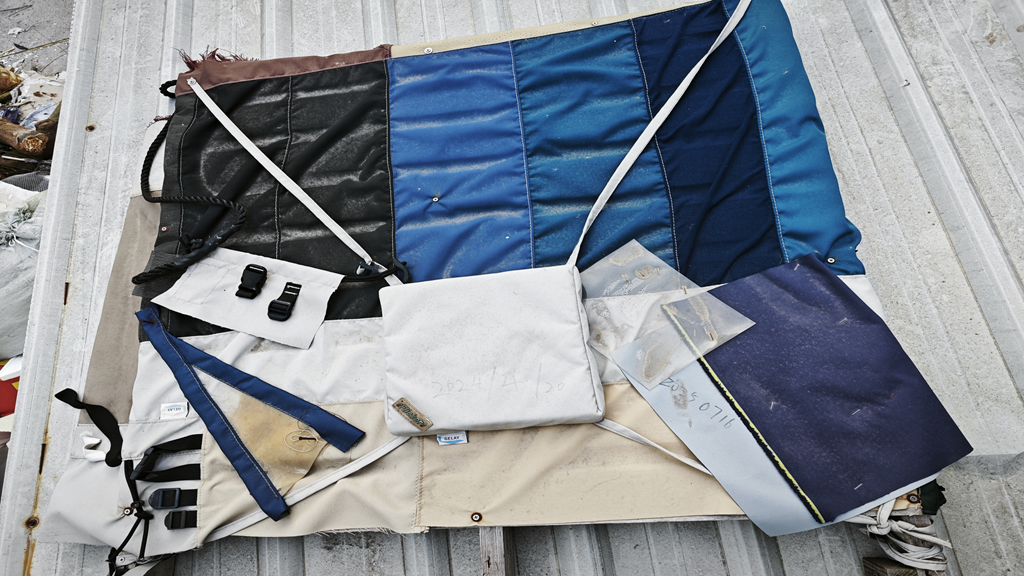
Opening the Blue Sample: Exposed and Sheltered Areas
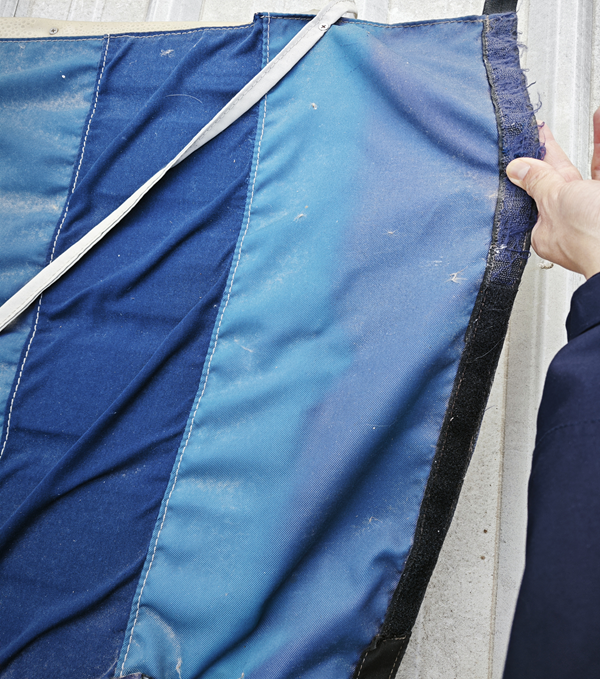
The blue fabric shows some fading. An important detail is how it was originally placed on the roof: the material was folded, leaving some sections on top and others underneath.
When we opened it during this inspection, the difference was clear. The upper sections, which had received more direct outdoor exposure, looked lighter. The lower sections had been partly protected by the fabric above and retained a deeper blue. These are different exposure areas within the same sample.
That placement matters when reading the photographs. The darker fabric is not a fresh piece brought in for comparison; it is the part that sat underneath. The lighter areas help us see where the sample experienced more exposure. Surface dirt is also visible, and we have kept it in the photographs as part of the condition found on the roof.
We want this series to show the changes as they appear. A statement that the blue fabric had shown no fading would miss what this inspection actually revealed. Recording where the change occurred gives us a more useful reference for the next visit.
Inspection Video
A Closer Look at the White Elastic
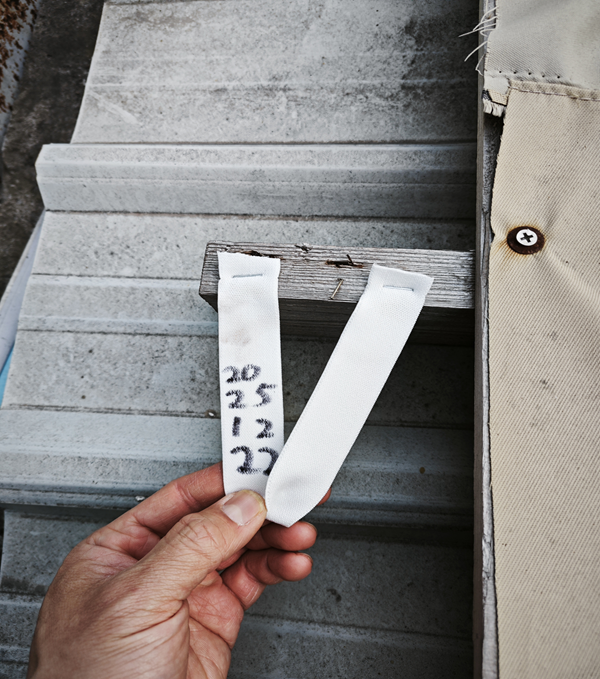
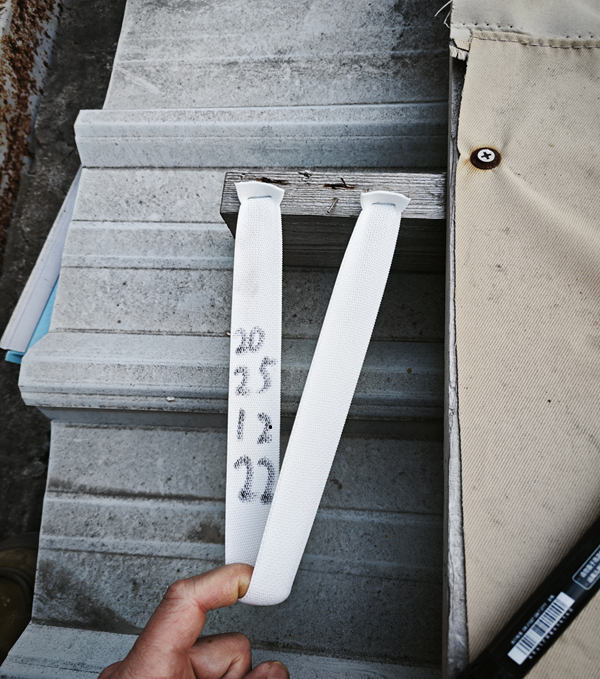
The white elastic is another detail we wanted to document. The elastic material we use here is spandex, also known as elastane, rather than rubber.
During this visit, we handled the elastic and photographed it in both a relaxed position and under a hand pull. It has performed well in our practical observation so far. The paired photographs provide a simple record of its condition and how it could be extended at the time of inspection.
For a finished canvas product, these smaller components deserve attention alongside the main fabric. An elastic edge, a seam or a fastening can affect how a cover fits and how it works in daily use. We therefore keep these details in the outdoor test record rather than looking at fabric colour alone.
Continuing the Rooftop Record
Our earlier visit on 16 July 2025 included the addition of a blue-violet polyester sample and a transparent PVC film. This March inspection continues that same process of returning to the materials, looking closely and recording what has changed. Samples added later naturally have shorter exposure histories than those present at the start of the programme.
The inspection was recorded on 20 March 2026. They document this inspection, rather than a laboratory measurement of colour retention, strength or elastic recovery.
We will leave the programme running and continue checking the exposed surfaces, sheltered folds, stitching and elastic. The value of a long-term test comes from returning to the same materials—and being willing to show the changes, as well as the details that are holding up well.
